Concept
How to Compare Insulation Materials
A practical framework for choosing insulation by performance, carbon, and cost
7 min readUpdated April 2026
Save guideWhy insulation comparison needs its own guide
Insulation is one of the product categories where comparison is most commonly done badly. The core problem is that insulation products are specified for thermal performance, but marketed and compared using metrics that do not reflect thermal performance - per kilogram, per cubic metre, or per unit of thickness.
Two insulation products can have identical U-value performance but wildly different weight, thickness, and cost. Comparing them per kilogram produces a misleading result. Comparing them per square metre at the target U-value produces a useful one.
This guide provides a framework for comparing insulation products fairly, covering the five dimensions that matter most: thermal performance, embodied carbon, moisture and breathability, fire rating, and cost.
Thermal performance: the primary comparison basis
The purpose of insulation is to resist heat flow. The relevant metric is thermal conductivity (lambda value, λ), measured in W/mK. Lower lambda means better insulation per unit thickness.
However, what matters for a building is the U-value of the complete build-up, not the lambda of a single product in isolation. A product with a higher lambda value simply needs to be thicker to achieve the same U-value. This has implications for wall thickness, floor-to-ceiling height, and overall build cost - but it does not mean the product is worse.
Lambda value (λ)
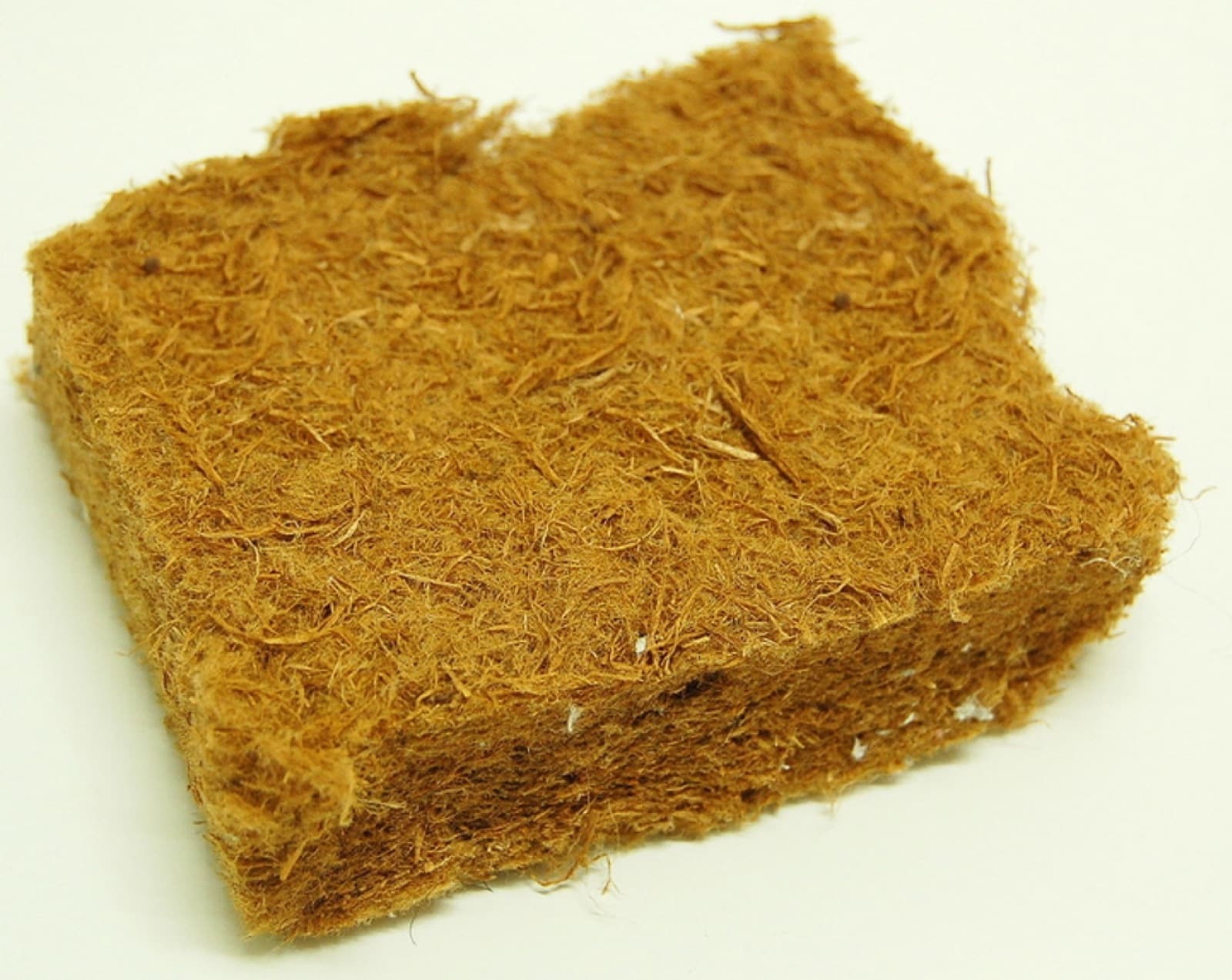
Thermal conductivity in W/mK. Lower = better insulator. PIR: 0.022, wood fibre: 0.038, sheep wool: 0.035.
Required thickness
To achieve the same U-value, higher-lambda materials need greater thickness - check build-up constraints.
Thermal mass
Dense materials (wood fibre, hempcrete) store heat and moderate temperature swings. Helpful for summer comfort.
Tip. Always compare at the target U-value for your build-up, not at the same thickness. A product that needs 20mm more thickness might still be the better choice when carbon, cost, and buildability are considered.
Embodied carbon: compare at the right unit
Embodied carbon comparison for insulation must be done per square metre at equivalent thermal performance - not per kilogram or per cubic metre. This is the single most important rule for fair insulation comparison.
A dense wood fibre board weighs more per square metre than a lightweight PIR panel at the same U-value. Comparing per kilogram makes the wood fibre look worse. Comparing per square metre at the same thermal resistance gives the true picture.
On Matera, the compare table shows carbon figures with their declared unit. If two products use different declared units, look for the normalised figure or calculate the per-square-metre-at-target-U-value figure yourself using the product's lambda and density.
Watch out. Biogenic carbon (stored carbon in plant-based insulation) is sometimes netted off the A1–A3 total, making a product appear to have negative embodied carbon. Check whether the EPD reports biogenic carbon separately or includes it in the headline figure.
Moisture behaviour and breathability
Insulation materials vary significantly in how they interact with moisture. This is critical for building physics and long-term durability.
| Topic | Detail |
|---|---|
| Vapour-closed insulation (PIR, XPS, foil-faced products) | Acts as a vapour barrier. Simple to detail but unforgiving if moisture gets in - it cannot dry out through the insulation layer. |
| Vapour-open insulation (wood fibre, mineral wool, cellulose, sheep wool) | Allows moisture vapour to pass through. More forgiving of imperfect airtightness and can buffer seasonal humidity. Requires careful detailing to manage bulk water but more resilient to moisture trapped within the build-up. |
| Hygroscopic insulation (wood fibre, cellulose, sheep wool) | Actively absorbs and releases moisture vapour, buffering indoor humidity. This can improve indoor air quality and reduce condensation risk. |
Note. For retrofit projects, vapour-open insulation is generally preferred because existing buildings often have imperfect air barriers. Trapping moisture behind vapour-closed insulation in a retrofit can cause interstitial condensation.
Fire performance
Fire rating is a non-negotiable performance requirement. It must be confirmed before any other comparison is meaningful.
Insulation products are classified under the European reaction-to-fire classification system (Euroclass A1 to F). Most mineral fibre products achieve A1 or A2 (non-combustible). Most organic products (PIR, wood fibre, cellulose) achieve C to E unless treated or combined with non-combustible layers.
The fire performance of the insulation in isolation is only part of the picture. What matters is the fire performance of the complete build-up - insulation plus linings, barriers, and structural elements working together. A combustible insulation behind a non-combustible lining can meet the required standard.
- Check the Euroclass rating of the insulation product itself
- Check the fire test data for the complete build-up you intend to use
- For buildings over 18m in England, the Building Safety Act restricts combustible materials in external walls - check current regulations and approved details
- For all projects, confirm that the proposed insulation meets the fire strategy requirements in the project's fire engineer's report
Cost and buildability
Material cost is only part of the equation. The total installed cost includes labour, additional materials (fixings, tapes, membranes), and any knock-on effects on other elements.
- Thicker insulation may require deeper studs, wider reveals, and adjusted window positions - these are real costs
- Blown or sprayed insulation (cellulose, mineral wool) can be faster to install in irregular cavities than rigid boards
- Some natural insulation products have longer lead times or fewer suppliers, which can affect programme and cost certainty
- Simpler detailing can offset higher material cost - a product that does not need a separate vapour barrier saves labour and reduces defect risk
Putting it all together
When comparing insulation materials for a specific application, work through these dimensions in order.
| Topic | Detail |
|---|---|
| Define the target U-value and available thickness | This sets the minimum lambda required and eliminates products that physically cannot fit |
| Check fire performance | Confirm the product meets the fire strategy requirements for the specific application (external wall, roof, floor, internal partition) |
| Compare embodied carbon per m² at the target U-value | Use EPD data where available, and note the data quality tier |
| Assess moisture behaviour | Is vapour-open or vapour-closed more appropriate for this build-up? Does the project benefit from hygroscopic buffering? |
| Compare total installed cost | Material plus labour plus consequential costs (deeper studs, additional membranes, etc.) |
| Consider durability and replacement cycles | Insulation that lasts the life of the building has lower lifetime carbon than insulation that needs replacing at 25 years |
Tip. Use Matera's compare table to line up products side by side. Save the shortlisted options to your project, then use the carbon estimate to see how each choice affects the project total.