Alternatives
Low-Carbon Material Substitutions
Practical swaps that reduce embodied carbon without compromising performance
6 min readUpdated April 2026
Save guideThe substitution approach
The most impactful embodied carbon reductions come not from exotic materials but from substituting high-carbon conventional products with lower-carbon alternatives that meet the same performance requirements.
The principle is straightforward: identify the materials that contribute most to your project's carbon total, then evaluate whether a lower-carbon alternative exists that satisfies the structural, thermal, fire, moisture, and durability requirements.
Focus on the big-ticket items first. Structure and substructure typically account for 50–70% of a building's embodied carbon. Envelope and insulation come next. Finishes and fitout contribute less per unit but add up across large surface areas.
Note. Reducing demand is always the first step. Designing for material efficiency - thinner slabs, optimised structural grids, reuse of existing structures - avoids carbon entirely rather than just lowering its intensity.
Structural substitutions
Structure is where the biggest carbon savings are possible, but also where the constraints are tightest. Structural substitutions must satisfy loading, span, fire resistance, and programme requirements.
| Swap | Carbon case | Watch-outs |
|---|---|---|
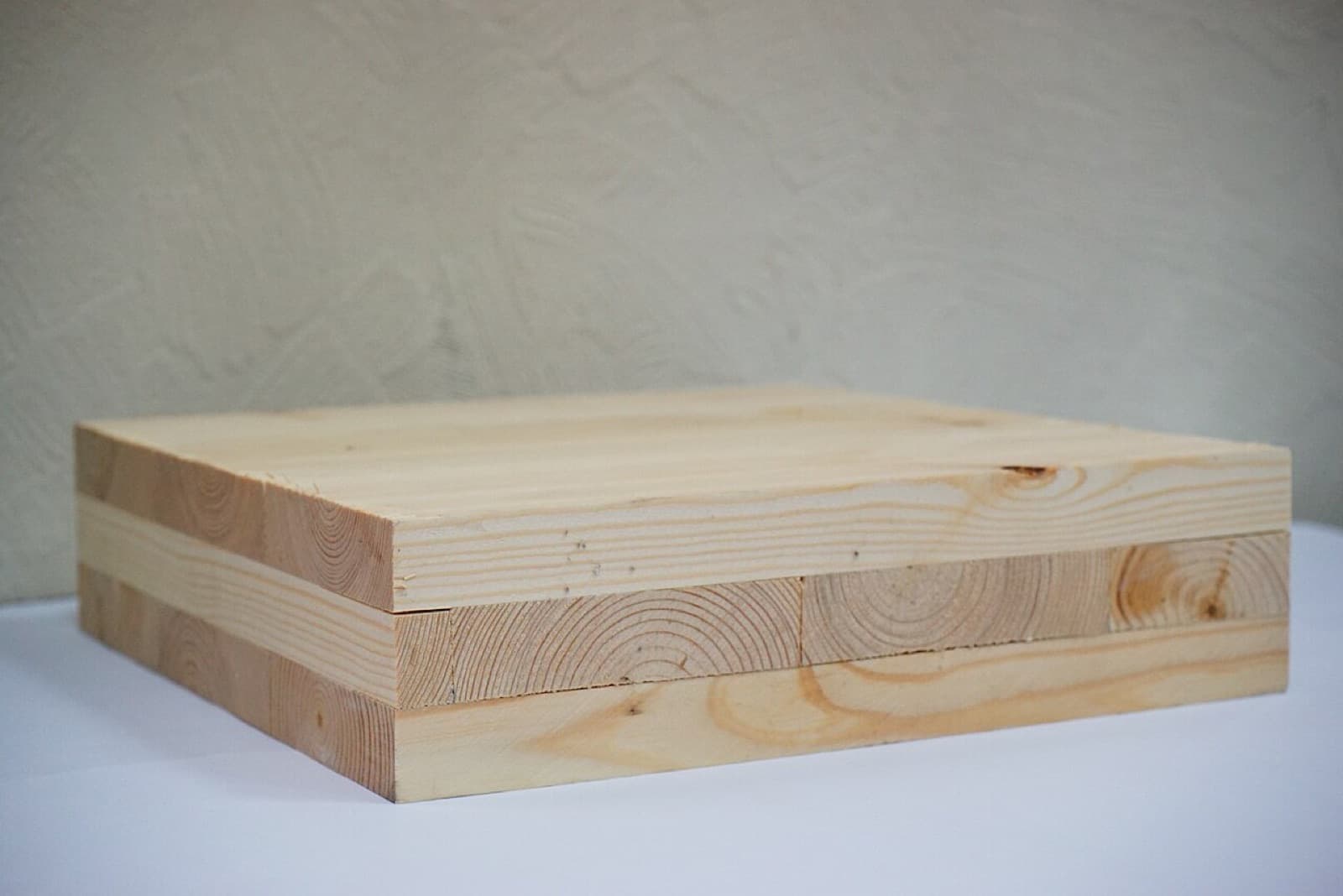
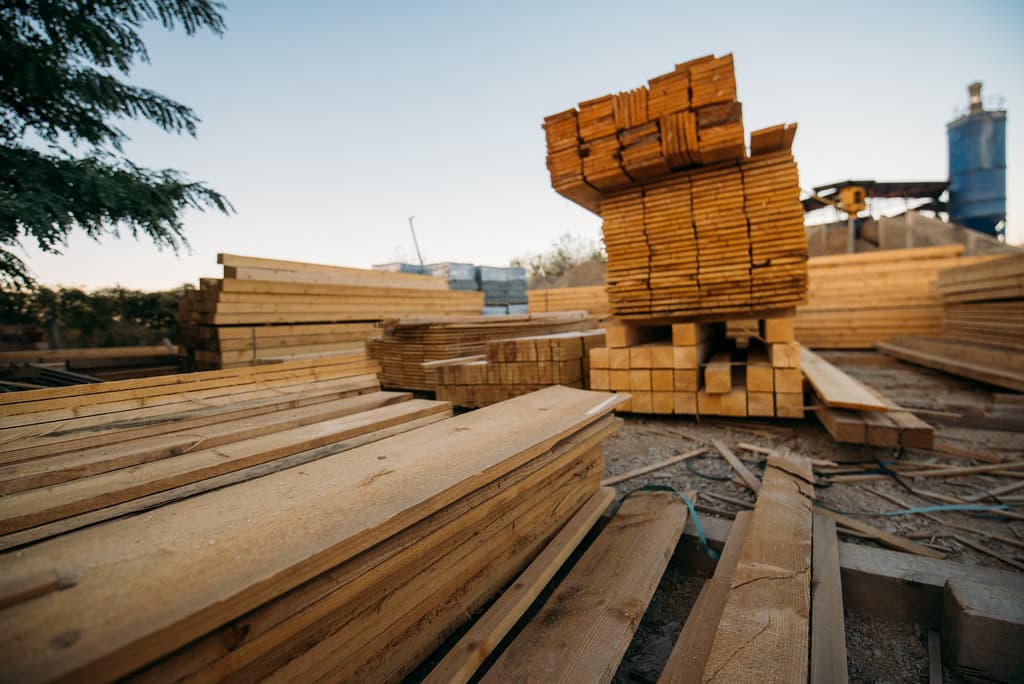
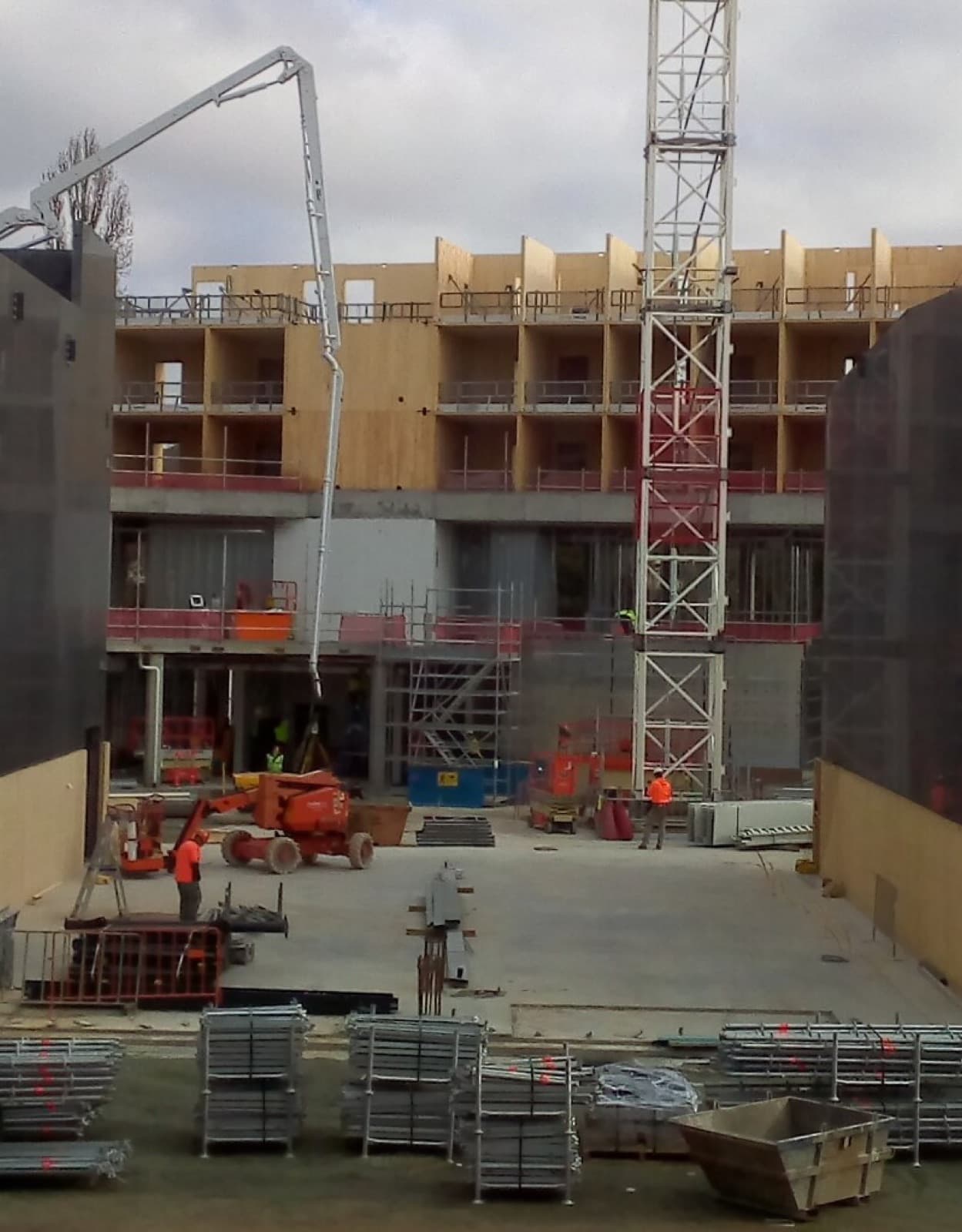
| Timber frame instead of steel frame | Engineered timber such as glulam or CLT can replace steel in many mid-rise applications, often reducing carbon per m² of floor area. | Fire engineering, acoustics, span limits, moisture detailing, and supply chain familiarity. |
| GGBS or PFA cement replacements | Replacing a portion of Portland cement with GGBS or PFA can materially reduce concrete carbon and is already familiar to many project teams. | Strength gain, curing time, specification acceptance, availability, and changing supply of cement substitutes. |
| Recycled steel instead of virgin steel | Steel with high recycled content, typically from electric arc furnace production, can have significantly lower embodied carbon. | Specify recycled content clearly and request mill certificates or EPD evidence. |
| Precast instead of in-situ concrete | Factory-controlled production can reduce waste, enable thinner sections, and allow higher cement replacement levels. | Transport distance, lifting strategy, programme fit, and connection design. |
- Steel → Cross-laminated timber
- CLT frames can replace steel in mid-rise buildings. Carbon stored in timber offsets embodied emissions.
- OPC concrete → GGBS/PFA blends
- Replacing 50–70% Portland cement with GGBS or PFA reduces concrete carbon by 40–60%.
- Concrete blocks → Rammed earth/hempcrete
- For non-structural walls, earth-based or hemp-lime alternatives offer dramatically lower carbon.
- Virgin aggregate → Recycled aggregate
- Recycled concrete and demolition aggregate reduces extraction and transport emissions.
Insulation substitutions
Insulation is one of the clearest substitution opportunities because the functional requirement - thermal resistance - is well defined and directly comparable across products.
The critical point is to compare at equivalent thermal performance: per square metre at the target U-value, not per kilogram. A denser product may have higher carbon per kg but lower carbon per m² at the required thickness.
| Alternative | Best fit | Trade-off |
|---|---|---|
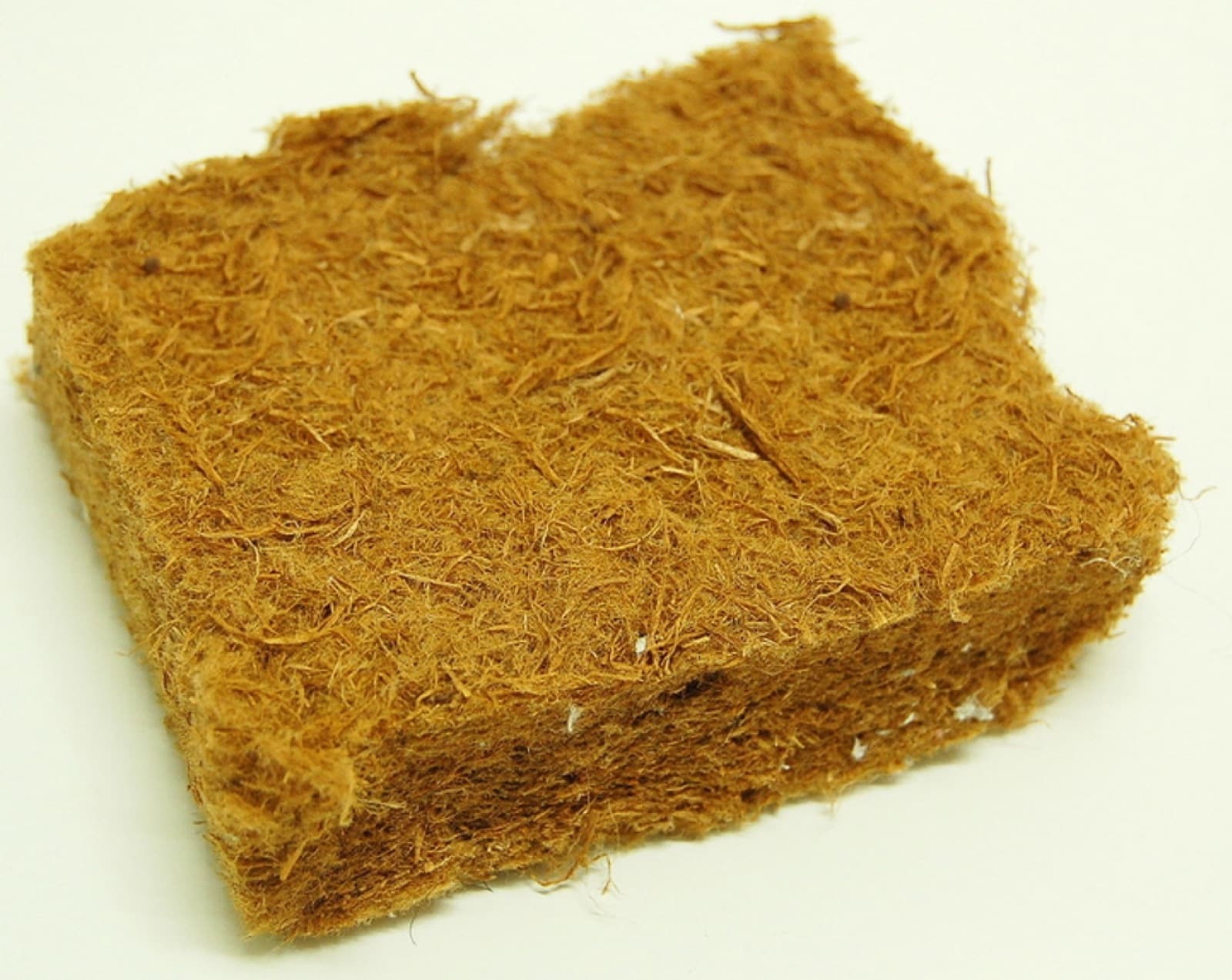
| Wood fibre instead of PIR | Lower production-stage carbon potential, biogenic carbon storage, and breathable wall or roof build-ups. | Usually needs greater thickness for the same U-value, affecting junctions and usable space. |
| Cellulose from recycled newsprint | Retrofit cavities, lofts, and projects where very low embodied carbon is a priority. | Needs appropriate detailing and moisture control, especially in wetter assemblies. |
| Cork | Durable, moisture-resistant insulation where longevity and resilience justify the cost. | Higher upfront cost and more limited supplier choice. |
| Mineral wool instead of phenolic or PIR foam | Lower embodied carbon potential with non-combustible performance benefits. | Greater thickness may be needed to match the same thermal performance. |
Tip. Always compare insulation products at the same target U-value, not per kilogram. A product that weighs more but insulates better per unit thickness may actually be the lower-carbon option per m² of wall or roof.
Envelope and finishes
Individual finish materials have lower carbon per unit than structural elements, but they cover large surface areas and are often replaced during the building's life. Cumulative impact matters.
| Swap | Why it helps | Check first |
|---|---|---|
| Lime mortar instead of cement mortar | Lower firing temperatures and potential carbonation over its lifetime. | Strength gain, exposure, programme, and masonry application. |
| Clay plaster instead of gypsum plaster | Very low embodied carbon and good moisture-buffering properties. | Compatibility with substrate, detailing, finish expectations, and installer experience. |
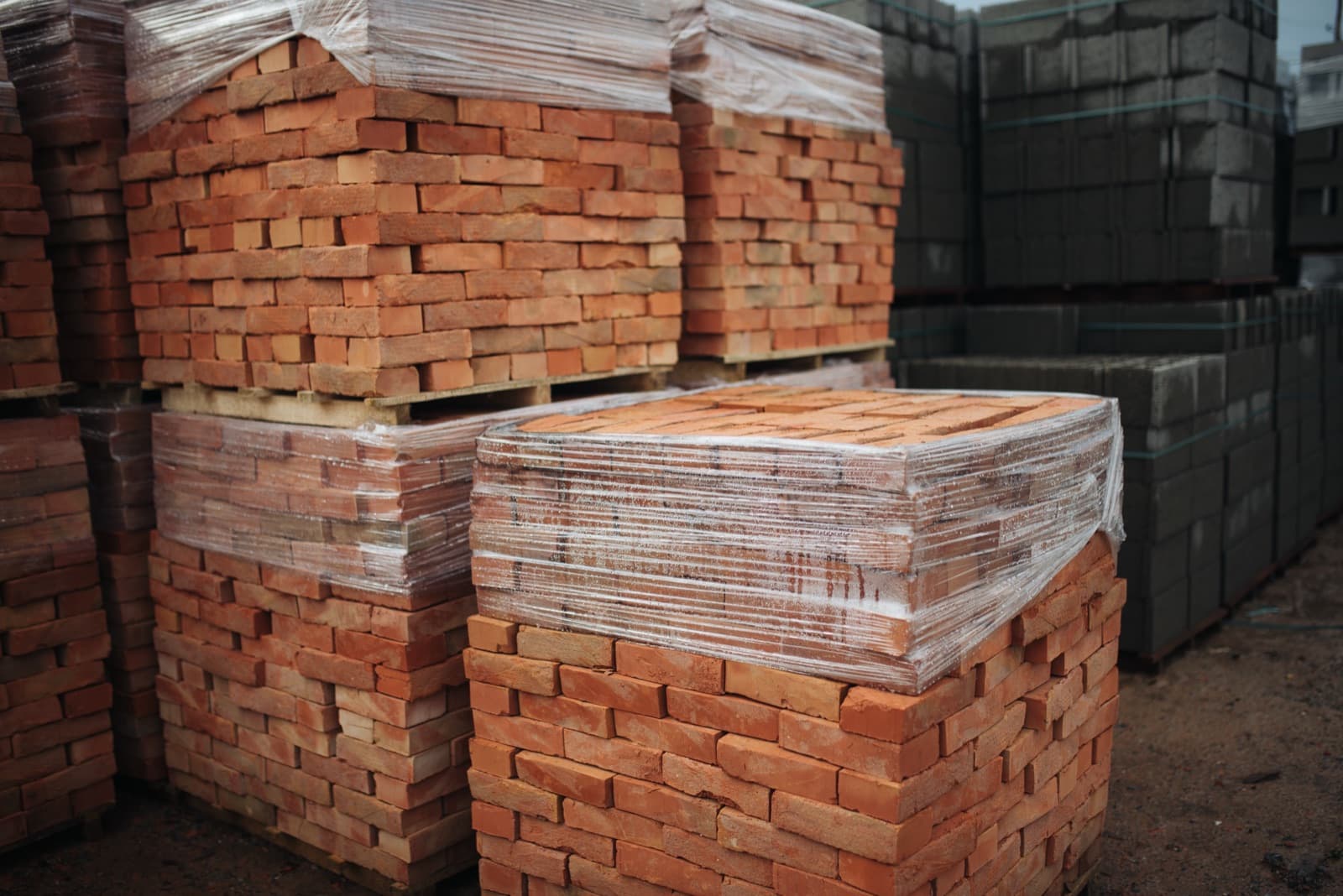
| Reclaimed brick instead of new brick | Avoids the firing process for new bricks entirely. | Availability, consistency, testing, cleaning, and wastage allowance. |
| Local natural stone instead of manufactured cladding | Low processing energy compared with many manufactured cladding systems. | Transport distance, fixing system, weight, and quarry evidence. |
| Natural paints and oils instead of synthetic finishes | Low-VOC, plant-based finishes can reduce embodied carbon and improve indoor air quality. | Durability, maintenance cycle, substrate compatibility, and VOC evidence. |
How to evaluate a substitution
A structured evaluation prevents both over-optimism and missed opportunities. Before specifying a lower-carbon alternative, work through these steps.
| Check | Question to answer |
|---|---|
| Functional equivalence | Does the alternative meet the same structural, thermal, fire, acoustic, and moisture requirements? |
| Declared unit | Are you comparing per functional unit, such as per m² of wall at target U-value, rather than per kilogram? |
| Data quality | Are both options backed by comparable evidence, ideally product-specific EPDs or clearly scoped estimates? |
| Durability | Does the replacement cycle change the whole-life carbon result? |
| Availability | Can the project programme absorb lead times, specialist installers, or limited supplier choice? |
| Side-by-side comparison | Have you compared scope, data quality, normalisation basis, price, and lead time in Matera's compare table? |
What not to do
Material substitution for carbon reduction is valuable, but it can go wrong without discipline.
| Topic | Detail |
|---|---|
| Do not substitute without checking structural, fire, and moisture performance | Carbon is one criterion among several |
| Do not compare carbon per kilogram when thermal performance per square metre is what matters | This is the most common error in insulation comparisons |
| Do not assume 'natural' always means 'lower carbon' | Some natural materials have significant processing energy, and transport distance matters |
| Do not ignore transport | A low-carbon product shipped from overseas may not beat a medium-carbon local alternative once A4 emissions are included |
| Do not optimise a single material in isolation | Reducing concrete carbon by 30% while doubling the steel tonnage is not progress |
| Do not treat carbon as the only criterion | Durability, buildability, cost, and supply chain reliability all matter for a successful project |
Useful links
- EPD InternationalLargest public EPD registry. Useful for benchmarking before commissioning your own.
- BRE Global EPDsUK-based EPD programme operator widely used for construction products.
- IBUInstitut Bauen und Umwelt - German programme operator widely accepted across Europe.
- FSC chain of custodyRequirements, fees, and the route to finding an accredited certifier.
- Cradle to CradleFull C2C standard covering material health, reuse, renewable energy, water, and social fairness.