Alternatives
Sustainable Concrete & Cement Alternatives
Reducing the carbon footprint of construction's most used material
9 min readUpdated April 2026
Save guideWhy concrete is the carbon problem
Concrete is the most widely used manufactured material on Earth. Global production exceeds 14 billion cubic metres annually - roughly two tonnes per person per year. It is cheap, versatile, durable, and available almost everywhere. It is also responsible for approximately 8% of global CO2 emissions.
The carbon problem is not concrete itself but its key ingredient: Portland cement (CEM I). Manufacturing Portland cement requires heating limestone and clay to around 1,450 degrees Celsius in a rotary kiln.
This process releases CO2 in two ways: from burning fuel to reach that temperature, and from the chemical decomposition of limestone (calcination), which releases CO2 trapped in the rock.
The calcination process alone accounts for about 60% of cement's emissions - it is a chemical inevitability, not an efficiency problem.
This means you cannot simply solve cement's carbon footprint by switching to renewable energy. The chemistry of the material itself releases CO2. Reducing concrete's carbon impact requires either using less cement, replacing it with lower-carbon alternatives, or fundamentally changing the chemistry.
Note. If the cement industry were a country, it would be the third-largest emitter of CO2 in the world, behind only China and the United States.
Supplementary cementitious materials (SCMs)
The most established and widely available approach to reducing concrete's carbon footprint is partially replacing Portland cement with supplementary cementitious materials. These are typically industrial byproducts that have cementitious properties of their own.
- GGBS (Blast furnace slag)
- By-product of steel making. Replaces up to 70% of Portland cement. Widely available, slow-setting.
- PFA (Pulverised fuel ash)
- By-product of coal power. Replaces up to 35% of cement. Availability declining as coal plants close.
- Calcined clay (LC3)
- Limestone calcined clay cement. Replaces up to 50% of clinker. Emerging technology with global scalability.
- Natural pozzolans
- Volcanic ash, rice husk ash, and silica fume. Regional availability varies. Well-proven performance.
Watch out. SCM supply is not guaranteed. GGBS depends on blast-furnace steel production (shifting to electric arc furnaces). Fly ash depends on coal power (being phased out). Specify these materials while they are available, but be aware of the supply trajectory.
Low-carbon and alternative cements
Beyond SCM blending, several alternative cement chemistries aim to fundamentally reduce or eliminate the calcination emissions of Portland cement.
| Topic | Detail |
|---|---|
| Geopolymer cement | Uses industrial byproducts (typically fly ash or slag) activated by an alkaline solution instead of Portland cement. Can reduce embodied carbon by 60-80%. Performance is proven in specific applications but mix design is more complex, and it is not yet covered by all structural design codes. |
| Belite-rich cements | Modify the clinker chemistry to use belite (C2S) instead of alite (C3S) as the primary phase. Requires lower kiln temperatures, reducing fuel emissions by 15-20%. Slower strength development but good long-term performance. |
| Magnesium-based cements (e.g. Novaite) | Use magnesium oxide instead of calcium oxide. Some formulations can absorb CO2 during curing, potentially creating carbon-negative binders. Still largely at pilot scale for structural applications. |
| Carbon-cured concrete | Injects captured CO2 into the concrete during mixing or curing, where it mineralises and permanently stores the carbon while improving strength. Companies like CarbonCure and Solidia are commercialising this approach. |
Design strategies to reduce concrete use
The lowest-carbon concrete is the concrete you do not pour. Design strategies can significantly reduce the volume of concrete required without compromising structural performance.
| Topic | Detail |
|---|---|
| Optimise structural design | Post-tensioning, voided slabs, and ribbed slab designs can reduce concrete volume by 20-40% compared to flat slabs. Work closely with the structural engineer to challenge conventional approaches. |
| Reduce over-specification | Structural engineers apply safety factors to account for uncertainty. Better site investigation, more refined analysis, and reduced load assumptions can trim concrete quantities. Even a 10% reduction in slab thickness across a large building is significant. |
| Use higher-strength concrete strategically | Higher-strength mixes use more cement per cubic metre but less concrete overall for the same structural capacity. The net carbon impact depends on the specific application. |
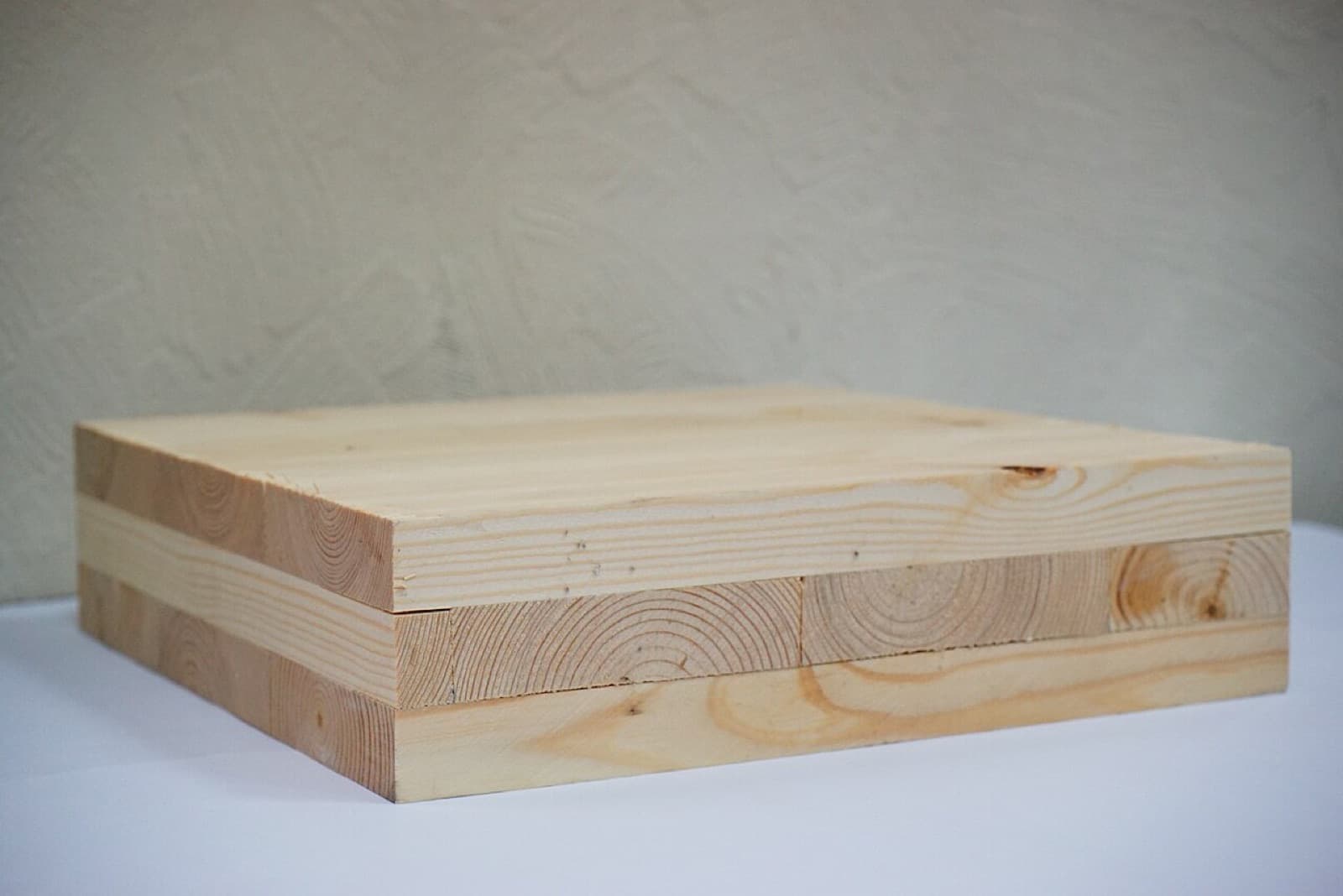
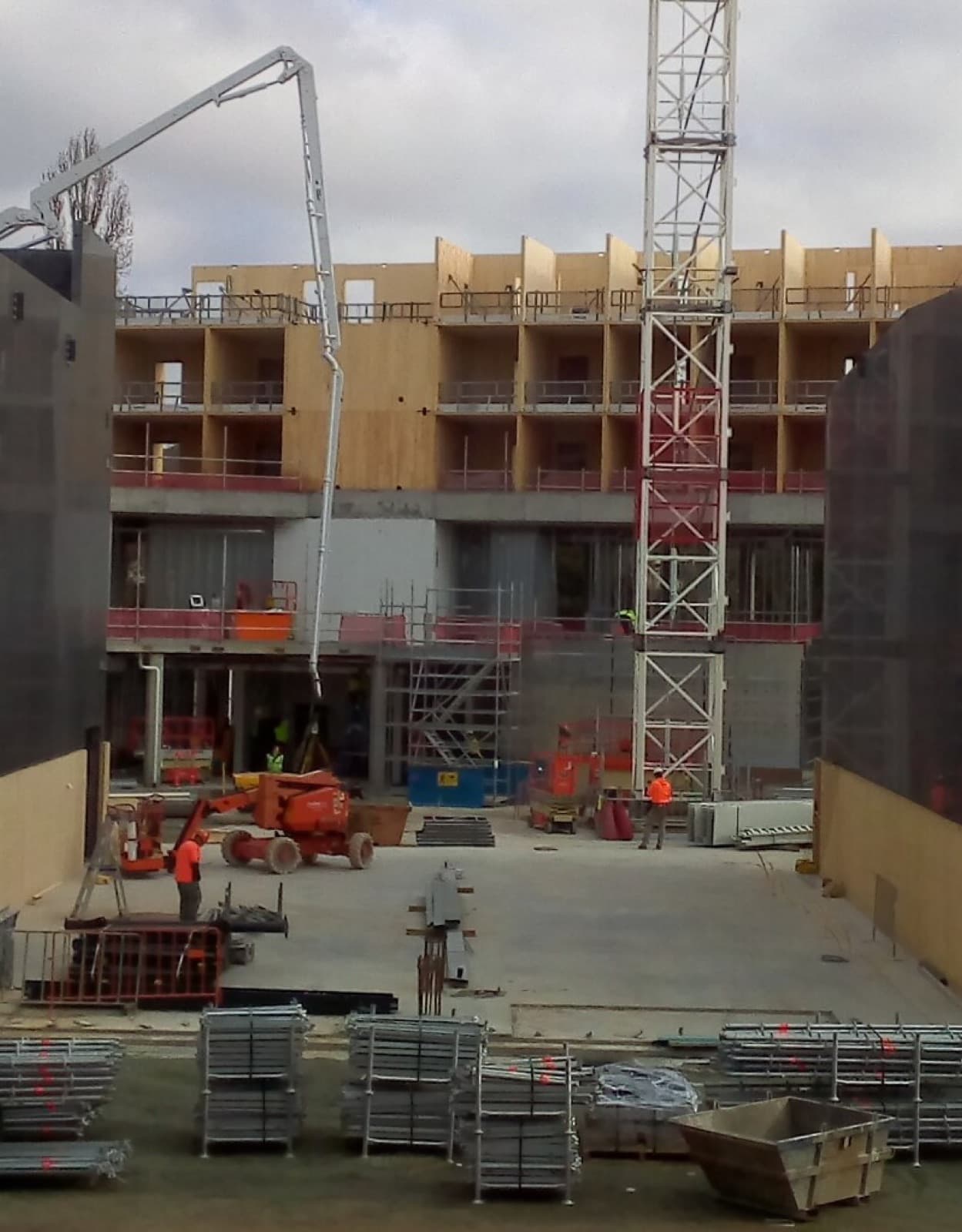
| Consider hybrid structures | Timber or steel for upper floors, concrete for foundations and ground floor. This plays to each material's strengths and minimises concrete where alternatives perform well. |
| Reuse existing structures | Retrofitting and extending existing buildings avoids the carbon cost of new foundations and substructure entirely. The substructure typically accounts for 15-25% of a building's total embodied carbon. |
How to specify low-carbon concrete
Specifying lower-carbon concrete requires collaboration between the architect, structural engineer, and concrete supplier. These practical steps help move from intention to delivery.
| Topic | Detail |
|---|---|
| Set a carbon target | Define maximum kg CO2e per m3 for each concrete application. The LETI Climate Emergency Design Guide suggests targets of 100-150 kg CO2e/m3 for typical structural elements, compared to 200-300 for conventional CEM I mixes. |
| Specify performance, not prescription | Instead of specifying 'CEM I concrete at 40 MPa', specify '40 MPa at 28 days with maximum 150 kg CO2e/m3'. This gives the concrete supplier freedom to optimise the mix. |
| Allow extended curing times | GGBS and fly ash concretes gain strength more slowly than CEM I. Specifying 56-day strength instead of 28-day strength opens up much higher replacement levels with no performance compromise. |
| Request EPD data from the concrete supplier | Many UK ready-mix suppliers now provide product-specific EPDs or carbon calculators for their mixes. Use these to verify the actual carbon footprint of the concrete being delivered. |
| Engage the supply chain early | Discuss low-carbon options with concrete suppliers at design stage, not after the structural design is fixed. Availability of GGBS and fly ash varies regionally, and suppliers can advise on what is achievable locally. |
Tip. The Concrete Centre and MPA publish benchmarking data for UK concrete carbon footprints. Use these to set realistic targets and measure progress.