Material
Recycled Aggregate & Concrete
Turning demolition waste into a construction resource
7 min readUpdated April 2026
Save guideWhat is recycled aggregate?
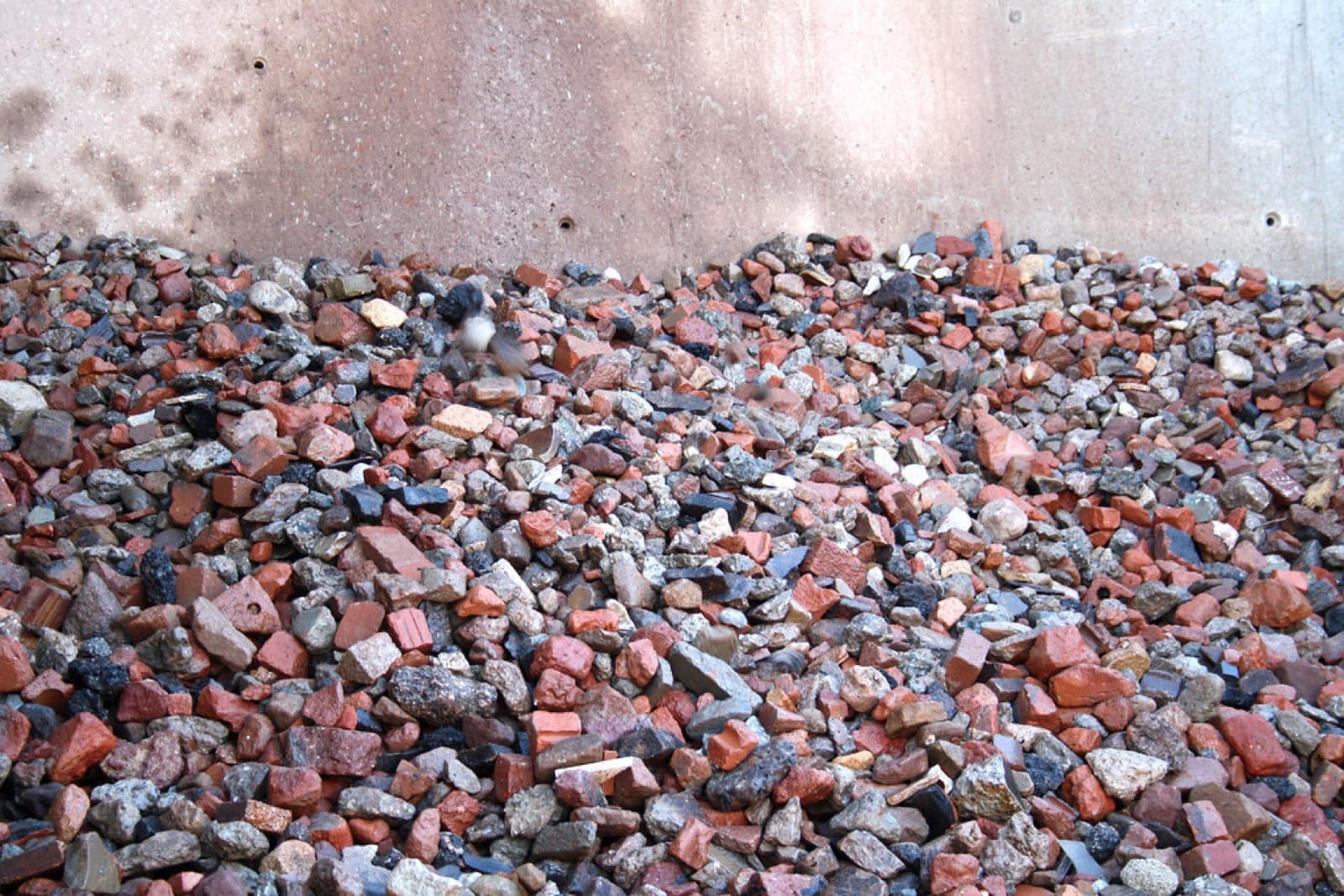
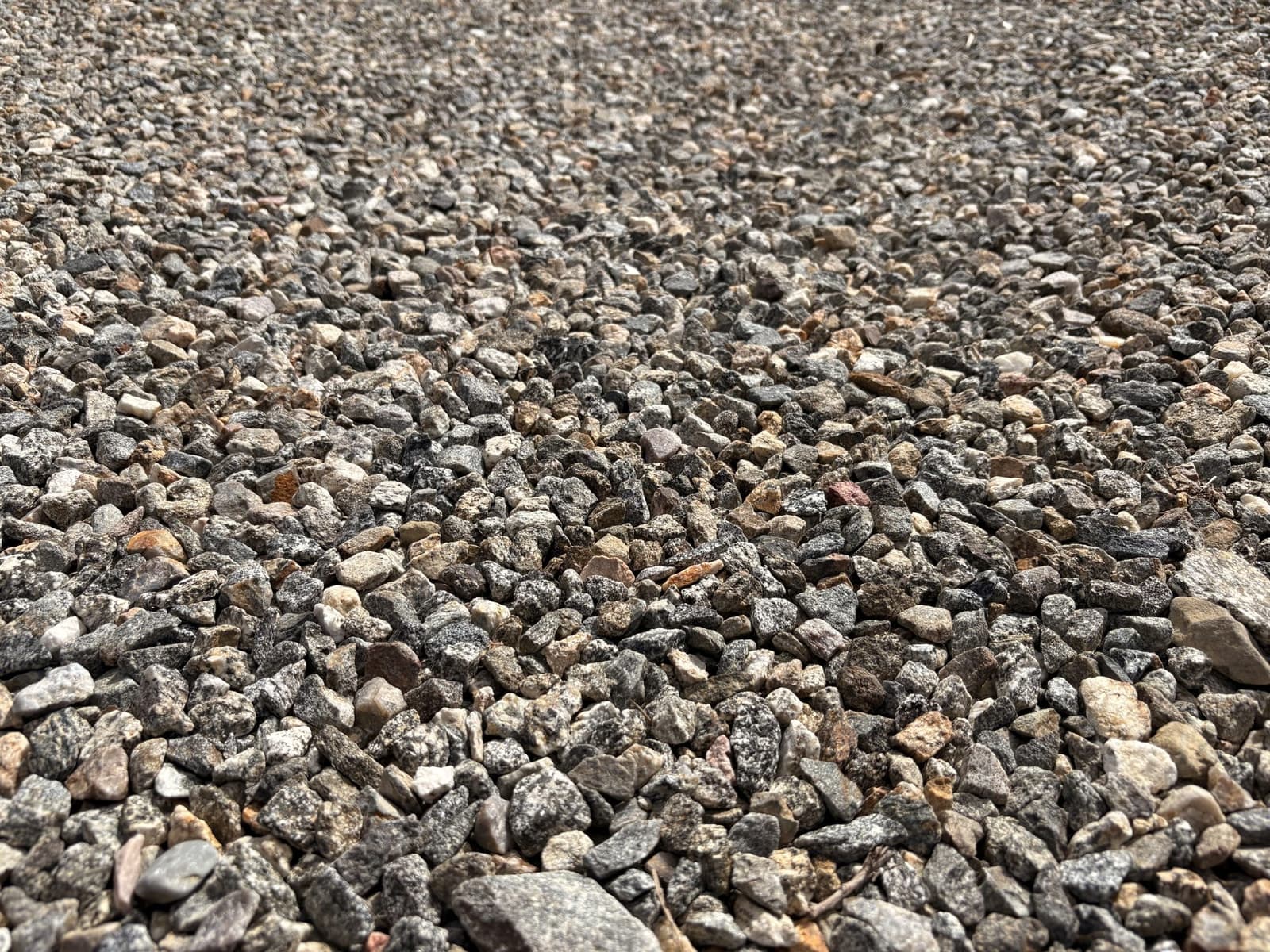
Recycled aggregate (RA) is produced by crushing and screening demolition waste - primarily old concrete, masonry, and sometimes asphalt - to create granular material that can replace virgin quarried aggregate in new construction. Recycled concrete aggregate (RCA) specifically refers to aggregate derived from crushed concrete.
The UK demolishes and refurbishes enough buildings each year to generate approximately 60 million tonnes of construction and demolition waste. A significant proportion of this is concrete and masonry that can be processed into high-quality recycled aggregate, diverting it from landfill and reducing demand for primary extraction.
Modern recycled aggregate processing plants use jaw crushers, impact crushers, magnetic separators, and screening equipment to produce graded aggregate that meets the same BS EN standards as virgin material.
Types and quality grades
Not all recycled aggregate is the same. Quality varies depending on the source material, processing, and intended use.
- Recycled concrete aggregate (RCA)
- Crushed concrete - the highest quality, usable in new structural concrete when graded and tested to BS EN 12620.
- Recycled aggregate (RA)
- A blend of crushed concrete, masonry, and inert material. Suits sub-base, fill, and lower-grade applications.
- Secondary aggregate
- Industrial byproducts like slate waste or china clay sand - not strictly recycled but displaces primary aggregate.
- Reclaimed aggregate
- Material reused directly without crushing, such as reclaimed gravel from road reconstruction.
Note. BS 8500-2 permits up to 20% RCA in designated concretes (RC40-RC50) and up to 100% in lower-strength applications. Some specifiers are achieving higher replacement levels through project-specific testing and approval.
Performance and technical considerations
Recycled aggregate performs differently from virgin aggregate in some respects, and these differences must be accounted for in mix design and specification.
| Topic | Detail |
|---|---|
| Water absorption | RCA typically absorbs more water than virgin aggregate (3-8% vs 1-2%) due to residual cement paste. This affects workability and requires adjusted water content in concrete mixes |
| Density | Slightly lower than virgin aggregate (2,200-2,400 kg/m³ vs 2,500-2,700 kg/m³), affecting concrete density and structural calculations |
| Strength | Concrete made with RCA can achieve equivalent compressive strength to virgin aggregate concrete at the same cement content, though mix design optimisation may be needed |
| Durability | Chloride and sulphate content must be tested, particularly for aggregate sourced from marine or industrial environments. Carbonation resistance may differ |
| Shrinkage | Slightly higher drying shrinkage is sometimes observed in RCA concrete - typically 10-20% higher than equivalent virgin aggregate mixes |
| Consistency | Quality can vary between batches depending on the source demolition material. Regular testing is essential |
Carbon and environmental benefits
Using recycled aggregate reduces environmental impact in multiple ways, though the magnitude depends on the specific comparison being made.
| Topic | Detail |
|---|---|
| Avoided extraction | Eliminates the energy and land disturbance associated with quarrying virgin rock |
| Reduced transport | Recycled aggregate is often processed close to demolition sites in urban areas, reducing haulage distances compared to quarried aggregate from rural locations |
| Landfill diversion | Redirects demolition waste from landfill, avoiding disposal costs and environmental impacts |
| Lower embodied carbon | Recycled aggregate typically has 30-50% lower embodied carbon than equivalent virgin aggregate when transport savings are included |
| Resource conservation | Extends the productive life of existing quarries and reduces pressure on finite mineral resources |
Watch out. The carbon benefit of recycled aggregate is heavily dependent on transport distances. If the recycling plant is further from the project than the nearest quarry, the carbon advantage can be lost. Always compare on a project-specific basis.
Applications
Recycled aggregate is suitable for a wide range of construction applications, from high-specification structural concrete to lower-grade bulk fill.
- Structural concrete
- Up to 20% RCA in designated concretes under BS 8500-2; more with project-specific approval.
- Sub-base and capping
- Widely used and well-established for road and building sub-bases (Type 1, Type 2).
- Drainage and fill
- Excellent drainage characteristics for backfill, French drains, and land reclamation.
- Concrete blocks
- Many block manufacturers already use recycled aggregate as standard - check supplier specifications.
- Landscaping and hardscaping
- Crushed concrete for paths, car park surfacing, and general landscaping fill.
Useful links
- EPD InternationalLargest public EPD registry. Useful for benchmarking before commissioning your own.
- BRE Global EPDsUK-based EPD programme operator widely used for construction products.
- IBUInstitut Bauen und Umwelt - German programme operator widely accepted across Europe.
- BREEAMHow certifications map onto BREEAM credits that specifiers chase on projects.