Concept
Sustainable Material Procurement
A practical checklist for project teams
6 min readUpdated April 2026
Save guideWhy procurement decisions matter
Material procurement is where sustainability ambitions meet reality. A project can have the best environmental targets on paper, but if the procurement team does not know how to act on them, those targets stay on paper. Most embodied carbon in a building is locked in at the point of material purchase - not at design stage.
This guide provides a practical, stage-by-stage checklist for project managers, quantity surveyors, and procurement teams who want to make better material decisions without needing a sustainability consultant at every step.
Before you start: set the brief
Sustainable procurement starts before you contact a single supplier. These actions set the foundation for every material decision that follows.
Define your sustainability priorities
Carbon reduction? Responsible sourcing? Health and wellbeing? Pick 2–3 priorities for this project.
Set measurable targets
Translate priorities into requirements: e.g. 'All timber FSC/PEFC certified' or 'Embodied carbon below X kgCO₂e/m²'.
Map to rating system credits
If targeting BREEAM, LEED, or similar, identify which material credits align with your sustainability brief.
Tip. Even a rough carbon budget is better than none. Use LETI or RIBA benchmarks as starting points if your project does not have bespoke targets.
Evaluating suppliers and products
When assessing materials and suppliers, look beyond price and lead time. These checks help you distinguish genuine sustainability performance from marketing.
- Ask for product-specific EPDs - not generic industry data or manufacturer estimates. Third-party verified EPDs (EN 15804 compliant) are the gold standard
- Check certification status: FSC/PEFC for timber, Cradle to Cradle for circular design, EU Ecolabel for environmental performance, BES 6001 for responsible sourcing
- Verify origin and supply chain: where are raw materials extracted? Where is manufacturing? Shorter supply chains typically mean lower transport emissions
- Request a modern slavery statement and check whether the supplier has ISO 14001 or equivalent environmental management certification
- Compare like-for-like: ensure you are comparing products with the same declared unit, lifecycle boundary, and functional performance before drawing conclusions from EPD data
Writing sustainability into specifications
Specifications are where requirements become contractual. Vague sustainability language gets ignored - specific, measurable clauses get delivered.
- Require EPDs for all materials contributing more than 5% of the project's embodied carbon
- Specify minimum recycled content percentages where evidence supports it (e.g., 25% for structural steel, 30% for concrete aggregates)
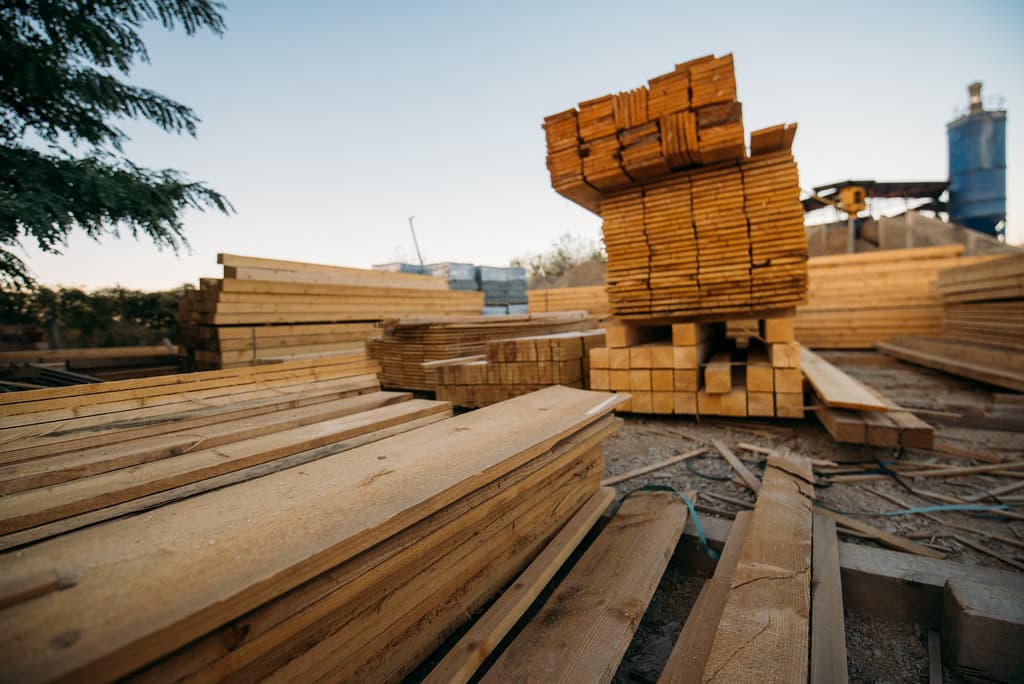
- Require FSC or PEFC certification for all timber and timber-based products
- Set maximum transport distances for high-mass materials like aggregates, concrete, and masonry where local alternatives exist
- Include a substitution clause: if a specified product is unavailable, any substitute must meet or exceed the original's environmental performance with evidence
Note. BREEAM Mat 03 awards credits for specifying materials with third-party certified responsible sourcing. Building this into your procurement specification earns credits without additional effort later.
During construction: verify and track
Procurement does not end when the order is placed. These ongoing checks ensure what arrives on site matches what was specified.
- Request delivery documentation confirming certification chain of custody (e.g., FSC-COC numbers on timber deliveries)
- Track actual vs specified materials - log any substitutions and verify the replacement meets the original sustainability requirements
- Monitor waste: record material waste rates by trade and feed this back into future procurement to right-size orders
- Collect as-built EPD data for post-completion carbon reporting and BREEAM evidence submissions
- Photograph certification labels and delivery notes as evidence for audit trails
Common mistakes to avoid
These are the procurement pitfalls that most frequently undermine sustainability outcomes on construction projects.
- Leaving sustainability requirements out of tender documents and trying to retrofit them after contractor appointment
- Accepting manufacturer marketing claims without asking for third-party verified evidence
- Specifying a sustainable product but allowing unrestricted substitution without environmental equivalence requirements
- Focusing only on embodied carbon while ignoring toxicity, indoor air quality, and end-of-life recyclability
- Treating sustainability as a design-stage activity rather than following it through procurement, construction, and handover
By the numbers. The most common failure is not a lack of good intentions - it is a gap between what the design team specifies and what the procurement team actually buys.
How Matera helps
Matera brings together verified supplier data, EPD-backed carbon figures, certification status, and origin information in one place. Use the search filters to shortlist materials that meet your specification requirements, compare products side by side, and request quotes directly from verified suppliers.
Every material with a verified EPD badge has been reviewed by Matera's team to ensure the data is accurate and current.
Useful links
- EPD InternationalLargest public EPD registry. Useful for benchmarking before commissioning your own.
- BRE Global EPDsUK-based EPD programme operator widely used for construction products.
- IBUInstitut Bauen und Umwelt - German programme operator widely accepted across Europe.
- FSC chain of custodyRequirements, fees, and the route to finding an accredited certifier.
- BREEAMHow certifications map onto BREEAM credits that specifiers chase on projects.