Rammed Earth & Unfired Clay
Ancient materials meeting modern performance standards
7 min readUpdated April 2026
Save guideWhat are rammed earth and unfired clay?
Rammed earth is a construction technique in which a mixture of subsoil, gravel, sand, and clay is compacted in layers within temporary formwork to create solid, load-bearing walls. The resulting walls are dense, thermally massive, and visually striking, with distinctive horizontal strata revealing the natural colour variations of the earth used.
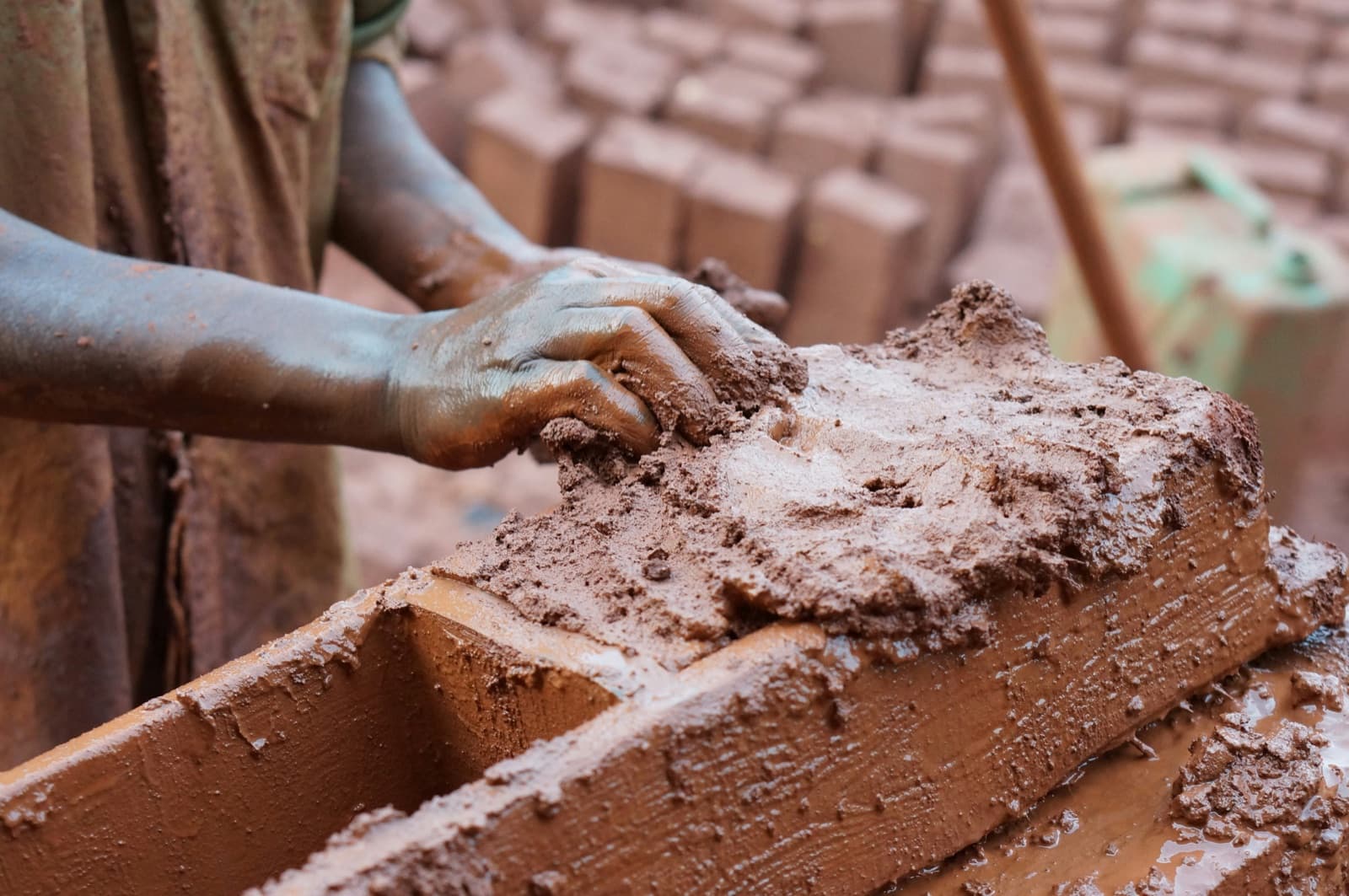
Unfired clay products - including clay blocks, clay plaster, and clay boards - use similar raw materials but are factory-formed rather than rammed on site. They are dried at ambient temperature rather than kiln-fired (as with conventional bricks), avoiding the high energy input and carbon emissions of firing.
Both approaches represent some of the lowest-embodied-carbon walling options available. Earth building has been used for millennia across every continent, and modern engineering has brought scientific rigour to what was historically a vernacular technique.
Construction methods
Modern rammed earth construction uses pneumatic tampers and engineered formwork systems to achieve consistent compaction and quality. The subsoil mix is carefully designed - typically 60-70% aggregate (gravel and sand) and 30-40% fines (silt and clay) - and moisture content is controlled to around 10-12% for optimal compaction.
- Traditional rammed earth
- Compacted subsoil only, bound by its clay content. Needs protection from persistent rain. 1-5 MPa compressive strength.
- Stabilised rammed earth
- 5-10% cement or lime adds durability and water resistance. 5-15 MPa, higher carbon than unstabilised.
- Prefabricated panels
- Rammed in a factory for better quality control and faster assembly, limited by transport weight and size.
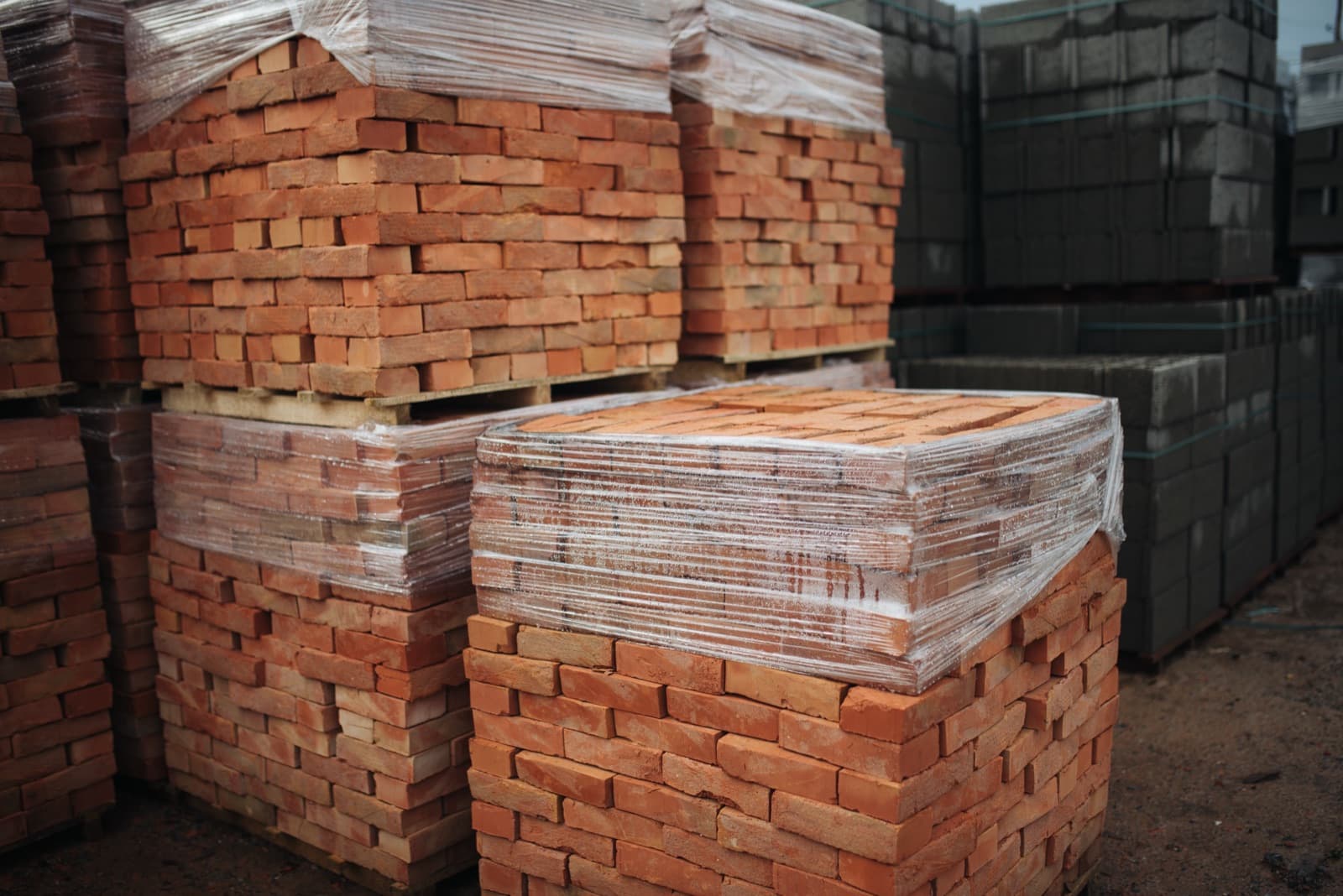
- Unfired clay blocks
- Machine-pressed blocks laid in clay mortar - familiar blockwork method with much lower embodied carbon.
- Clay plaster
- Applied in 2-3 coats over a substrate. Excellent moisture buffering and indoor air quality; smooth or textured.
Thermal and structural performance
Rammed earth walls are thermally massive rather than thermally insulating. A 300mm rammed earth wall has a U-value of approximately 1.5-2.0 W/m²K - well above current Building Regulations requirements. For this reason, modern rammed earth buildings typically use a cavity wall system: two leaves of rammed earth with insulation between them, or a rammed earth external leaf with internal insulation.
The thermal mass of rammed earth is its real strength. Dense earth walls absorb heat during the day and release it at night, smoothing temperature swings and reducing peak heating and cooling loads. In well-designed passive buildings, this can significantly reduce energy consumption.
| Topic | Detail |
|---|---|
| Thermal conductivity | 0.8-1.2 W/mK (dense, uninsulated) |
| Thermal mass | Excellent - density of 1,800-2,200 kg/m³ |
| Compressive strength | 1-5 MPa (unstabilised), 5-15 MPa (stabilised) |
| Moisture buffering | Outstanding - unfired clay can absorb and release 3-6 times more moisture than fired brick |
| Acoustic performance | High mass provides good sound insulation (Rw 50-55 dB for 300mm wall) |
Tip. Combine rammed earth's thermal mass with external insulation (wood fibre or cork) to achieve modern U-value requirements while retaining the hygroscopic and thermal mass benefits internally.
Embodied carbon
Unstabilised rammed earth has some of the lowest embodied carbon of any walling material. The primary material is subsoil - often sourced from the building site itself during excavation - and the only energy input is mechanical compaction. No firing, no kiln, no chemical transformation.
Stabilised rammed earth has higher embodied carbon due to the cement or lime addition, but is still dramatically lower than conventional masonry or concrete blockwork.
Earth-based walling
- Unstabilised rammed earth: 5-15 kg CO2e/m²
- Unfired clay blocks: 10-25 kg CO2e/m²
- Stabilised rammed earth (8% cement): 30-60 kg CO2e/m²
Conventional masonry
- Conventional blockwork: 50-80 kg CO2e/m²
- Fired brick: 80-130 kg CO2e/m²
- Kiln firing drives the higher figures
By the numbers. When subsoil is sourced from on-site excavation, rammed earth can reduce walling embodied carbon by 80-95% compared to conventional masonry. Transport of the primary material is essentially zero.
Trade-offs and limitations
Earth building requires specific expertise and is not suited to every project type or programme.
| Topic | Detail |
|---|---|
| Specialist contractors | Limited number of experienced rammed earth builders in the UK |
| Construction speed | Slower than conventional blockwork or timber frame systems |
| Weather sensitivity | Rammed earth construction is best suited to drier months - rain during construction can damage unprotected walls |
| Insulation requirement | Rammed earth alone does not meet modern U-value standards without additional insulation |
| Structural limitations | Rammed earth is typically limited to low-rise construction (1-3 storeys) |
| Planning and Building Control | Unfamiliarity with the material can lead to longer approval processes |
| Cost | Rammed earth can cost 20-40% more than conventional masonry for the wall element, though whole-building costs may be comparable |
Useful links
- EPD InternationalLargest public EPD registry. Useful for benchmarking before commissioning your own.
- BRE Global EPDsUK-based EPD programme operator widely used for construction products.
- IBUInstitut Bauen und Umwelt - German programme operator widely accepted across Europe.
- BREEAMHow certifications map onto BREEAM credits that specifiers chase on projects.