Hempcrete & Hemp-Lime
A carbon-negative building material with centuries of potential
7 min readUpdated April 2026
Save guideWhat is hempcrete?
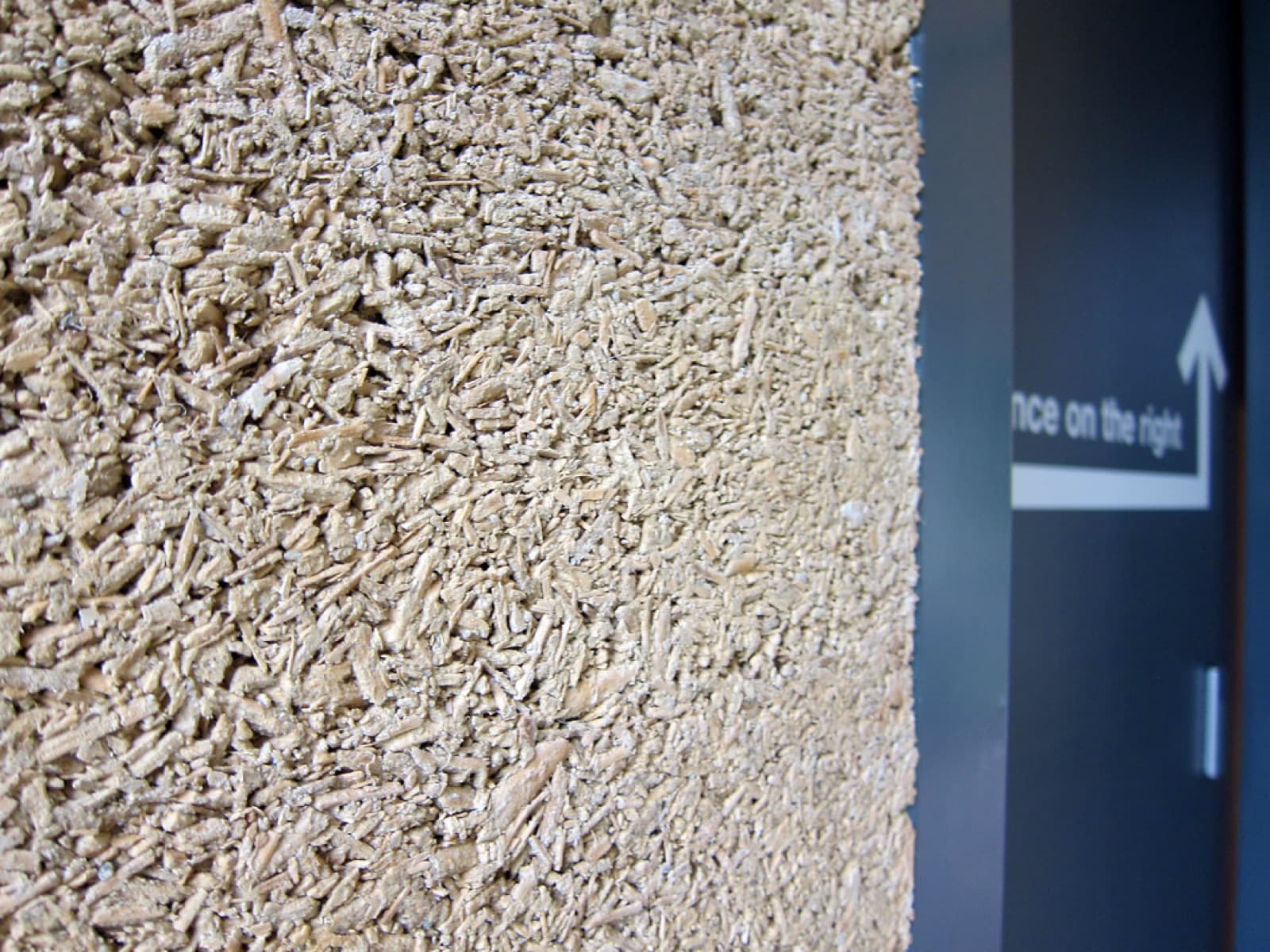
Hempcrete is a bio-composite building material made by mixing the woody inner core of the hemp plant (hemp shiv) with a lime-based binder and water. The result is a lightweight, insulating material that can be cast in situ around a structural timber frame, sprayed, or formed into prefabricated blocks and panels.
Despite its name, hempcrete is not a direct replacement for concrete. It is non-structural and cannot bear loads on its own. Instead, it fills and insulates around a timber or steel frame, providing thermal insulation, moisture regulation, and acoustic performance in a single material layer.
Hemp-lime construction has a long heritage in France, where it has been used in renovation and new-build projects since the early 1990s. In the UK, it is gaining traction as specifiers look for low-carbon, breathable wall systems suited to both new builds and heritage retrofits.
How is it made?
Industrial hemp is grown as a crop, reaching harvest height in around 14 weeks. After harvesting, the stalks are retted (partially decomposed) to separate the outer bast fibre from the woody shiv core. The shiv is then dried, graded, and bagged for construction use.
On site or in a factory, the shiv is mixed with a lime-based binder - typically a blend of hydraulic lime and a pozzolanic addite. Water is added to activate the binder, and the mixture is either cast into temporary formwork around a timber frame, sprayed using specialist equipment, or compressed into blocks for later installation.
The material takes several weeks to fully carbonate (the lime absorbs CO2 from the atmosphere as it cures), during which time it must be protected from heavy rain. Once cured, it forms a rigid, monolithic wall that can be finished with lime render or plaster.
Carbon sequestration and embodied carbon
Hempcrete is one of very few building materials that can credibly claim to be carbon-negative at the product stage. The hemp plant absorbs significant quantities of CO2 during its rapid growth period, and this carbon is locked into the shiv. The lime binder then absorbs additional CO2 from the atmosphere as it carbonates over months and years.
The net result, when measured across the product lifecycle (A1-A3), is that well-sourced hempcrete can store more carbon than is emitted during its production. Published EPD data from UK and European manufacturers typically shows negative or near-zero A1-A3 figures.
By the numbers. A typical hempcrete wall (300mm thick) can sequester approximately 35-40 kg CO2 per square metre of wall area, net of all manufacturing emissions.
Thermal and hygroscopic performance
Hempcrete has a thermal conductivity of approximately 0.06-0.09 W/mK depending on density and binder ratio. This is lower-performing than synthetic insulation products (PIR at 0.022 W/mK), meaning thicker walls are needed to achieve equivalent U-values.
However, hempcrete offers a significant advantage in hygroscopic performance - it can absorb and release moisture without losing thermal performance or degrading. This natural moisture buffering helps regulate indoor humidity, reduces the risk of condensation and mould, and can improve occupant comfort.
It is particularly valuable in retrofit projects where breathability is essential to protect historic building fabric.
| Topic | Detail |
|---|---|
| U-value for 300mm hempcrete wall | Approximately 0.19-0.25 W/m²K (depending on binder and density) |
| Moisture buffering | Absorbs up to 15% of its own weight in moisture without performance loss |
| Thermal mass | Moderate - helps regulate daily temperature swings |
| Airtightness | Good when lime-rendered on both faces, typically achieving 3-5 m³/h/m² at 50Pa |
Trade-offs and limitations
Hempcrete is not suitable for every project. Understanding its limitations helps you specify it appropriately.
| Topic | Detail |
|---|---|
| Non-structural | Requires a separate load-bearing frame (typically timber) |
| Thicker walls | 300-400mm typical, reducing internal floor area compared to thinner high-performance insulation |
| Curing time | 6-8 weeks for full carbonation - not suited to fast-track construction programmes |
| Moisture sensitivity during construction | Must be protected from heavy rain until cured |
| Limited UK supply chain | Fewer specialist contractors than conventional systems, though growing |
| Cost premium | Typically 10-25% more than conventional insulated timber frame, depending on contractor experience and project scale |
| Fire performance | Achieves good fire resistance when rendered, but individual product fire test data should always be checked |
Where to use hempcrete
Hempcrete is most commonly used for external walls in low-rise residential and small commercial buildings. It is particularly well suited to projects where breathability, natural materials, and whole-life carbon performance are priorities.
- New-build timber frame houses and housing developments
- Heritage and listed building retrofits where breathability is essential
- Passivhaus and low-energy buildings (with appropriate wall thickness)
- Self-build projects where the slower pace of construction is acceptable
- Community and educational buildings where natural materials are valued
Tip. For retrofit projects, hempcrete can be cast directly against existing masonry walls, providing insulation and moisture management without the need for a vapour barrier that could trap moisture in the existing fabric.
Useful links
- EPD InternationalLargest public EPD registry. Useful for benchmarking before commissioning your own.
- BRE Global EPDsUK-based EPD programme operator widely used for construction products.
- IBUInstitut Bauen und Umwelt - German programme operator widely accepted across Europe.
- FSC chain of custodyRequirements, fees, and the route to finding an accredited certifier.